1 Transition Elements
After studying this chapter, you should be able to:
- Describe the position of transition elements in the periodic table and the characteristic features of their outer electron configurations
- Explain the general properties of transition elements, including variable oxidation states and colored compounds
- Define coordination compounds (complexes), identify their components (central ion, ligands, inner sphere, outer sphere), and explain the nature of coordinate bonds
- Describe the physical and chemical properties of iron, including the interconversion of \(\ce{Fe^{2+}}\) and \(\ce{Fe^{3+}}\)
- Explain the principles and processes of iron smelting and steelmaking
- Describe the properties and uses of copper, and explain the electrolytic refining of copper
- Describe the properties and uses of titanium, and explain why its metallurgy is challenging
In Volume I, we studied elements of the main groups — such as the halogens, the oxygen family, and the alkali metals. In this chapter, we turn to the transition elements, a large group of metallic elements occupying the central portion of the periodic table.1
1.1 Section 1: Overview of Transition Elements
Position in the Periodic Table and Outer Electron Configurations
From the periodic table, we can see that its central portion — from Group IIIB to Group IIB, spanning 10 columns and including the lanthanide and actinide series — contains 68 elements. These elements encompass all of Group VIII and the entire set of B-group elements. They are conventionally called transition elements and are distributed across Periods 4 through 7, as shown in Figure 1.1.
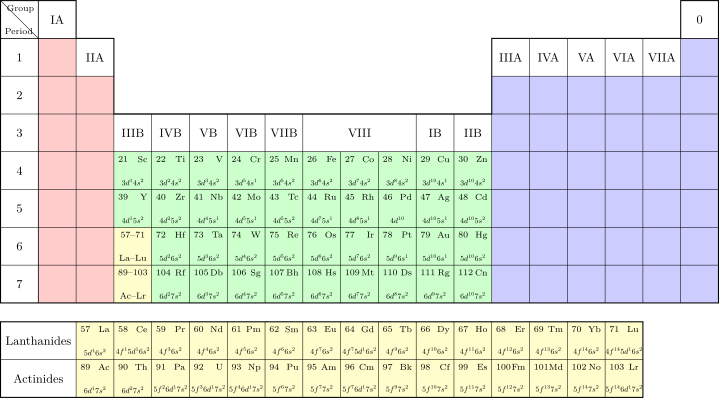
The electron configurations of transition element atoms share a common characteristic. As shown in Figure 1.1, their outermost electron shells all contain 1–2 \(s\) electrons (with the exception of Pd). As the atomic number increases, the additional electrons mostly fill the \(d\) orbitals of the second-to-last shell. For the lanthanide and actinide elements, the additional electrons primarily fill the \(f\) orbitals of the third-to-last shell. This outer electron configuration reflects a fundamental difference from main-group element atoms. For example, the outer electron configuration of scandium (Sc) is \(3d^1 4s^2\), and that of uranium (U) is \(5f^3 6d^1 7s^2\). Many properties of the transition elements are closely related to these outer electron configurations.
General Properties of Transition Elements
1. Transition Elements Are All Metals
Transition elements are all metals, which is why they are also called transition metals. Their atoms have no more than 2 electrons in the outermost shell, which are easily lost, and the atoms readily form metallic bonds. In the solid state, they form metallic crystals. Compared to main-group metal atoms in the same period, transition metal atoms generally have smaller atomic radii. Transition metals have higher densities, higher melting points, and higher boiling points. For example, the density of platinum is \(21.45\ \text{g/cm}^3\), roughly 8 times that of aluminum; the melting point of tungsten is \(3410\,{}^{\circ}\text{C}\), the highest of all metals.
In addition, transition metals often possess high hardness, excellent ductility and machinability, good electrical and thermal conductivity, corrosion resistance, and the ability to form alloys with many special properties. For example, gold and silver have outstanding ductility and can be drawn into extremely fine wires or rolled into extremely thin foils. Silver and copper have excellent electrical and thermal conductivity. Platinum, titanium, chromium, nickel, and other metals all have good corrosion resistance.
2. Transition Elements Commonly Exhibit Multiple Oxidation States
When transition elements form compounds, both the outermost \(s\) electrons and the penultimate \(d\) electrons can participate in bonding. Therefore, transition elements typically exhibit variable oxidation states. Table 1.1 lists the common oxidation states of the Period 4 transition elements (underlined values indicate the more stable states).
| Group | Element | Outer electron configuration | Oxidation states |
|---|---|---|---|
| IIIB | Sc | \(3d^1 4s^2\) | +3 |
| IVB | Ti | \(3d^2 4s^2\) | +2, +3, +4 |
| VB | V | \(3d^3 4s^2\) | +2, +3, +4, +5 |
| VIB | Cr | \(3d^5 4s^1\) | +2, +3, +6 |
| VIIB | Mn | \(3d^5 4s^2\) | +2, +3, +4, +6, +7 |
| VIII | Fe | \(3d^6 4s^2\) | +2, +3 |
| VIII | Co | \(3d^7 4s^2\) | +2, +3 |
| VIII | Ni | \(3d^8 4s^2\) | +2, +3 |
| IB | Cu | \(3d^{10} 4s^1\) | +1, +2 |
| IIB | Zn | \(3d^{10} 4s^2\) | +2 |
From Table 1.1, we can see that from Group IIIB to Group VIIB, the maximum oxidation state of each element equals its group number. This is because the total number of outer \(s\) and \(d\) electrons in these atoms equals the group number.
3. Transition Element Compounds Are Often Colored
Transition element compounds are often colored. These colors are related to the electronic structure of the transition metal ions and also depend on factors such as the type of associated anion and whether the crystal contains water of crystallization. For example, copper(II) fluoride (\(\ce{CuF2}\)) is white, while copper(II) sulfide (\(\ce{CuS}\)) is black. Cobalt(II) chloride (\(\ce{CoCl2}\)) is blue, while its hexahydrate (\(\ce{CoCl2 * 6H2O}\)) is pink. Anhydrous copper(II) sulfate (\(\ce{CuSO4}\)) is white, while the pentahydrate (\(\ce{CuSO4 * 5H2O}\)) is blue.
Transition element compounds are also often colored in aqueous solution. These colors belong to hydrated transition metal ions, which may be similar to or different from the crystal colors. For example, the hydrated copper(II) ion is blue — matching the color of \(\ce{CuSO4 * 5H2O}\) — but differing from the white of anhydrous \(\ce{CuSO4}\).
Furthermore, transition elements readily form coordination compounds (complexes). We will study coordination compounds in Section 2.
Importance of Transition Elements in National Defense and the Economy
Transition elements are of vital importance to national defense and every sector of the economy. The defense and economic sectors require vast amounts of steel, as well as many other transition metals. For example, the electrical industry needs large quantities of copper; the electronics industry also requires silver, gold, platinum, and palladium. The manufacture of high-speed aircraft, rockets, and ships requires titanium. Chromium, manganese, nickel, zinc, cobalt, tungsten, molybdenum, vanadium, niobium, tantalum, and the lanthanides are widely used to produce various alloys or alloy steels — these are indispensable for manufacturing missiles, tanks, weapons, and all kinds of machinery and equipment. Among the actinides, uranium serves as fuel for nuclear reactors and as material for nuclear weapons. Many transition metals — including platinum, palladium, vanadium, titanium, nickel, and iron — are also important catalysts in the chemical industry.
China is rich in deposits of many transition elements, such as the lanthanides, tungsten, molybdenum, manganese, vanadium, and titanium — an advantageous resource for the country’s modernization.
- Transition elements occupy Groups IIIB through IIB (including lanthanides and actinides) in the periodic table
- Their outermost shells have 1–2 \(s\) electrons; additional electrons fill \(d\) (or \(f\)) orbitals of inner shells
- All transition elements are metals with high density, high melting points, and good electrical/thermal conductivity
- They commonly exhibit multiple oxidation states because both \(s\) and \(d\) electrons participate in bonding
- Their compounds are often colored, and they readily form coordination compounds
Exercises for Section 1
What are transition elements? What are the characteristics of their electron configurations? Write the full electron configurations of chromium, manganese, cobalt, and nickel.
Why are transition elements all metals? What physical properties do most of them share?
Why do transition elements commonly have multiple oxidation states? Illustrate with examples.
Silica gel (hydrated silicon dioxide, also called silica aerogel) is a desiccant. A certain amount of the indicator \(\ce{CoCl2}\) is added to indicate the degree of moisture absorption. This desiccant is blue when dry and turns pink when it has absorbed too much water and lost its drying capacity. Explain the color change of the silica gel.
What is the importance of transition elements for national defense and the economy?
1.2 Section 2: Coordination Compounds
In Section 1, we learned that white anhydrous copper sulfate turns its aqueous solution blue — the color of the hydrated copper ion. Experiments show that the hydrated copper ion is a complex ion containing 4 water molecules: \(\ce{[Cu(H2O)4]^{2+}}\). Below, we will study this type of complex ion.2
Composition of Coordination Compounds
1. The Concept of Coordination Compounds
Let us first perform the following experiment.
Add a small amount of sodium hydroxide solution dropwise to a test tube containing copper sulfate solution. A blue precipitate of copper hydroxide forms. Then add an adequate amount of concentrated ammonia solution. The precipitate dissolves, yielding a deep blue solution. Add a small amount of sodium hydroxide solution again to the deep blue solution — no change occurs, and no copper hydroxide precipitate forms.
Let us analyze the reactions occurring in this experiment.
We already know that copper sulfate reacts with sodium hydroxide to produce a precipitate of copper hydroxide. Since \(\ce{Cu(OH)2}\) is sparingly soluble but does have a finite solubility, an equilibrium exists between the \(\ce{Cu(OH)2}\) precipitate and the trace amounts of \(\ce{Cu^{2+}}\) and \(\ce{OH^{-}}\) in solution:
\[ \ce{Cu(OH)2 <=> Cu^{2+} + 2OH^{-}} \]
Experimental analysis shows that when ammonia is added, \(\ce{NH3}\) molecules combine with the trace \(\ce{Cu^{2+}}\) ions in solution to form a deep blue complex ion — \(\ce{[Cu(NH3)4]^{2+}}\) — called the tetraamminecopper(II) ion.3 This reaction can be expressed as:
\[ \ce{4NH3 + Cu^{2+} -> [Cu(NH3)4]^{2+}} \]
This reduces the concentration of free \(\ce{Cu^{2+}}\) in solution, thereby disrupting the equilibrium between \(\ce{Cu(OH)2}\) and \(\ce{Cu^{2+}}\)/\(\ce{OH^{-}}\) and causing the \(\ce{Cu(OH)2}\) precipitate to dissolve gradually. The resulting \(\ce{[Cu(NH3)4]^{2+}}\) is difficult to ionize in aqueous solution, so very little free \(\ce{Cu^{2+}}\) remains. Therefore, when additional \(\ce{OH^{-}}\) is added, no \(\ce{Cu(OH)2}\) precipitate forms. If this solution is concentrated and crystallized, a deep blue crystal — \(\ce{[Cu(NH3)4]SO4}\), called tetraamminecopper(II) sulfate — is obtained.
Tetraamminecopper(II) sulfate is a complex compound containing the complex ion \(\ce{[Cu(NH3)4]^{2+}}\). A complex ion formed from one type of ion combined with molecules, or from two different types of ions, is called a coordination ion (or complex ion). Compounds containing coordination ions are coordination compounds (or complexes). The \(\ce{[Cu(H2O)4]^{2+}}\) mentioned earlier is also a coordination ion; chalcanthite (\(\ce{CuSO4 * 5H2O}\)), which contains it, is a coordination compound. Cryolite (\(\ce{Na3[AlF6]}\), sodium hexafluoroaluminate), which we studied previously, is also a coordination compound.
2. Composition of Coordination Compounds
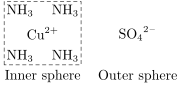
Research shows that the structure of coordination compounds is quite complex, but in general, each has a core around which other components are arranged. For example, in \(\ce{[Cu(NH3)4]SO4}\), the \(\ce{Cu^{2+}}\) ion is the core, called the central ion. The four \(\ce{NH3}\) molecules are evenly distributed around it and are called the ligands (or coordination agents). Together, the central ion and ligands form the coordination ion. The \(\ce{SO4^{2-}}\) ion is farther from the central ion and less intimately associated with it. The coordination ion formed by the central ion and ligands is called the inner sphere of the coordination compound (enclosed in square brackets in the formula), while the other part (e.g., \(\ce{SO4^{2-}}\)) is called the outer sphere (Figure 1.2).
The central ion of a coordination compound is generally a cation. The ligands can be molecules or anions. In \(\ce{[Cu(NH3)4]SO4}\), the ligand \(\ce{NH3}\) is a neutral molecule; in \(\ce{Na3[AlF6]}\), the ligand \(\ce{F^{-}}\) is an anion. Coordination ions carry a charge, whereas coordination compounds are electrically neutral. Therefore, the algebraic sum of the charges on the outer-sphere ions, the central ion, and the ligand ions must equal zero.
The total number of ligands that bond to a single central ion is called the coordination number of the central ion. In \(\ce{[Cu(NH3)4]^{2+}}\), the coordination number of \(\ce{Cu^{2+}}\) is 4. In \(\ce{Na3[AlF6]}\), the coordination number of \(\ce{Al^{3+}}\) is 6. Many factors influence the coordination number, including the charge, radius, and outer electron configuration of both the central ion and the ligands.
3. Chemical Bonding in Coordination Compounds
How are the various parts of a coordination compound held together? Research shows that the outer-sphere ions and coordination ions are bonded by ionic bonds, while the central ion and ligands are bonded by coordinate bonds (also called dative bonds).
The formation of a coordinate bond requires two conditions: one partner must have empty orbitals, and the other must be able to provide a lone pair of electrons. Consider the formation of the coordinate bonds in \(\ce{[Cu(NH3)4]^{2+}}\):
The \(3d\) orbitals of \(\ce{Cu^{2+}}\) are not completely filled, and its \(4s\) and \(4p\) orbitals — close in energy to the \(3d\) orbitals — are empty. Thus \(\ce{Cu^{2+}}\) has empty orbitals. Meanwhile, \(\ce{NH3}\) has one lone pair of electrons:
\[ \begin{array}{c} \ce{H} \\[-4pt] \overset{\times}{\underset{\times}{\ce{:N}}}{}^{\times}\ce{H} \\[-4pt] \overset{.}{\ce{H}} \end{array} \]
When \(\ce{Cu^{2+}}\) interacts with \(\ce{NH3}\), coordinate bonds form to produce \(\ce{[Cu(NH3)4]^{2+}}\):
\[ \left[\begin{array}{c} \ce{NH3} \\[-2pt] \downarrow \\[-2pt] \ce{NH3} \rightarrow \ce{Cu} \leftarrow \ce{NH3} \\[-2pt] \uparrow \\[-2pt] \ce{NH3} \end{array}\right]^{2+} \]
Transition element ions such as \(\ce{Fe^{3+}}\), \(\ce{Fe^{2+}}\), \(\ce{Cu^{2+}}\), \(\ce{Ag^{+}}\), and \(\ce{Hg^{2+}}\) all possess empty orbitals and therefore readily form coordination compounds — this is a key characteristic of transition elements. Anions like \(\ce{F^{-}}\), \(\ce{Cl^{-}}\), \(\ce{CN^{-}}\), and \(\ce{SCN^{-}}\), as well as molecules like \(\ce{H2O}\) and \(\ce{NH3}\), all have lone pairs of electrons and can therefore serve as ligands. Any substance that can act as a ligand (or contains ions that can act as ligands) is called a complexing agent. Common complexing agents include cyanides, fluorides, and ammonia.
The outer sphere and inner sphere of a coordination compound are bonded by ionic bonds. Therefore, when a coordination compound dissolves in water, it ionizes to form the outer-sphere and inner-sphere ions. At the same time, the coordination ion itself also undergoes a certain degree of ionization in water. For example:
\[ \ce{[Cu(NH3)4]^{2+} <=> Cu^{2+} + 4NH3} \]
\[ \ce{[Ag(NH3)2]^{+} <=> Ag^{+} + 2NH3} \]
(diamminesilver(I) ion, also called silver–ammonia complex ion)
\[ \ce{[Ag(CN)2]^{-} <=> Ag^{+} + 2CN^{-}} \]
(dicyanoargentate ion, also called silver–cyanide complex ion)
Different coordination ions ionize to different extents. In general, coordination ions with \(\ce{CN^{-}}\) as the ligand have very small degrees of ionization. Taking advantage of the fact that cyano-complex ions ionize very little — meaning that the equilibrium concentration of free metal ions is very low — the electroplating industry uses this property to control the rate at which metal ions accept electrons, thereby ensuring electroplating quality. That is why cyanides are commonly used as complexing agents when preparing electroplating solutions. However, cyanides are extremely toxic, so the electroplating industry is now researching and adopting cyanide-free electroplating processes using non-toxic complexing agents.
Applications of Coordination Compounds
Coordination compounds are widespread in nature and closely related to human life. For example, hemoglobin — which transports oxygen in humans and animals — is a coordination compound of \(\ce{Fe^{2+}}\). Chlorophyll, which carries out photosynthesis in plants, is a coordination compound containing \(\ce{Mg^{2+}}\).
Coordination compounds also have wide applications in agriculture, industry, and science. They are used in metallurgy, extraction of rare metals, electroplating, photography, and other fields. The cyanide gold extraction process is one example of their use in rare metal extraction. The principle is as follows: treating crushed gold ore with dilute sodium cyanide solution and blowing in air dissolves the gold to form the water-soluble coordination compound \(\ce{Na[Au(CN)2]}\):
\[ \ce{4Au + 8NaCN + 2H2O + O2 -> 4Na[Au(CN)2] + 4NaOH} \]
Zinc is then used to displace gold from the solution:
\[ \ce{2Na[Au(CN)2] + Zn -> Na2[Zn(CN)4] + 2Au}{\downarrow} \]
In photographic fixing, sodium thiosulfate solution is used to dissolve unreacted silver bromide — a complexation reaction:
\[ \ce{AgBr + 2Na2S2O3 -> Na3[Ag(S2O3)2] + NaBr} \]
In chemical experiments, the formation of colored coordination ions or compounds can be used to identify ions. For example, the reaction of \(\ce{SCN^{-}}\) with \(\ce{Fe^{3+}}\) to produce the red thiocyanatoiron(III) ion \(\ce{[Fe(SCN)]^{2+}}\) can be used to confirm the presence of \(\ce{Fe^{3+}}\).
- A coordination ion (complex ion) is formed when a metal ion combines with molecules or other ions through coordinate bonds
- A coordination compound (complex) contains a coordination ion
- Components: central ion (provides empty orbitals) + ligands (provide lone pairs) = inner sphere; counter-ions = outer sphere
- Inner sphere ↔︎ outer sphere: ionic bonds; central ion ↔︎ ligands: coordinate bonds
- Coordination number = total number of ligands bonded to the central ion
- Applications: hemoglobin (\(\ce{Fe^{2+}}\)), chlorophyll (\(\ce{Mg^{2+}}\)), gold extraction, electroplating, photography, ion identification
Exercises for Section 2
Given the two coordination compounds \(\ce{[Ag(NH3)2]NO3}\) (diamminesilver(I) nitrate) and \(\ce{Na3[AlF6]}\) (sodium hexafluoroaluminate), identify the coordination ion, central ion and its charge, ligands and coordination number, and the inner and outer spheres of each.
Using \(\ce{[Ag(NH3)2]^{+}}\) as an example, explain how the central ion bonds with its ligands.
When sodium chloride solution is mixed with silver nitrate solution, a white precipitate of silver chloride forms. Adding ammonia solution to the precipitate causes it to dissolve. Explain these observations and write the ionic equations. (Hint: refer to the formation of the copper–ammonia complex ion described in this section; the coordination number of \(\ce{Ag^{+}}\) is 2.)
Why does white anhydrous copper sulfate form a pale blue solution when dissolved in water, and why does the solution turn deep blue when a small amount of ammonia is added?
1.3 Section 3: Iron
Properties of Iron
Iron is located in Period 4, Group VIII of the periodic table and is an extremely important transition element. It exhibits multiple oxidation states, its compounds and their ions are mostly colored, and it readily forms coordination compounds. The outer electron configuration of the iron atom is \(3d^6 4s^2\): the outermost \(4s\) orbital has two electrons, and the penultimate \(3d\) orbitals are not fully occupied. In chemical reactions, the iron atom can easily lose its two \(4s\) electrons, and can also lose one additional \(3d\) electron. Therefore, iron commonly exhibits oxidation states of \(+2\) and \(+3\). Because \(\ce{Fe^{3+}}\) has the half-filled \(3d^5\) configuration — a particularly stable arrangement — the \(+3\) state is the most stable, followed by the \(+2\) state.
1. Physical Properties of Iron
Pure iron is a lustrous, silvery-white metal with a density of \(7.86\ \text{g/cm}^3\), a melting point of \(1535\,{}^{\circ}\text{C}\), and a boiling point of \(2750\,{}^{\circ}\text{C}\). Pure iron has considerable corrosion resistance, but ordinary iron typically contains carbon and other elements, which significantly lower its melting point and weaken its corrosion resistance. Iron is ductile and thermally conductive. It also conducts electricity, though its conductivity is poorer than that of copper or aluminum. Iron is attracted by magnets and can itself become magnetized in a magnetic field.
2. Chemical Properties of Iron
Iron is a moderately reactive metal, listed before hydrogen in the activity series.
(1) Reactions of iron with oxygen and other nonmetals
At room temperature, iron does not readily react with oxygen in dry air. However, when iron is burned in pure oxygen, it forms black iron(II,III) oxide (magnetite):
\[ \ce{3Fe + 2O2 ->[\text{ignite}] Fe3O4} \]
When heated, iron also reacts with other nonmetals such as sulfur and chlorine, producing iron(II) sulfide and iron(III) chloride, respectively:
\[ \ce{Fe + S ->[\Delta] FeS} \]
\[ \ce{2Fe + 3Cl2 ->[\Delta] 2FeCl3} \]
In the reaction of iron with sulfur, the iron atom loses its 2 outer \(4s\) electrons and becomes \(+2\). In the reaction with chlorine, the iron atom loses not only the 2 \(4s\) electrons but also 1 \(3d\) electron, becoming \(+3\). This is because chlorine is a stronger oxidizing agent than sulfur, with a greater ability to extract electrons.
At high temperatures, iron can also combine with carbon, silicon, phosphorus, and other elements. For example, iron and carbon combine to form iron carbide (\(\ce{Fe3C}\)), a gray, brittle, hard, and refractory substance.
(2) Reaction of iron with water
Red-hot iron reacts with steam to produce iron(II,III) oxide and hydrogen:
\[ \ce{3Fe + 4H2O{(g)} ->[\text{high temp.}] Fe3O4 + 4H2}{\uparrow} \]
At room temperature, iron does not react with water. However, in the presence of both water and atmospheric oxygen (along with carbon dioxide), iron readily undergoes electrochemical corrosion.
In addition, iron undergoes displacement reactions with hydrochloric acid, dilute sulfuric acid, and certain metal salts. For example, iron reacts with hydrochloric acid or dilute sulfuric acid, displacing hydrogen:
\[ \ce{Fe + 2H^{+} -> Fe^{2+} + H2}{\uparrow} \]
Iron reacts with solutions of less active metals such as copper salts, displacing the copper:
\[ \ce{Fe + Cu^{2+} -> Fe^{2+} + Cu} \]
Iron Compounds
1. Iron Oxides
The oxides of iron include iron(II) oxide (\(\ce{FeO}\)), iron(III) oxide (\(\ce{Fe2O3}\)), and iron(II,III) oxide (\(\ce{Fe3O4}\)).
Iron(II) oxide is a black powder. It is unstable and rapidly oxidizes to \(\ce{Fe3O4}\) when heated in air.
Iron(III) oxide is a reddish-brown powder, commonly known as iron red. It can be used as a pigment in paints.
Iron(II,III) oxide is a black crystalline material with magnetic properties, commonly called magnetic iron oxide. It is a complex compound containing iron in two different oxidation states: one-third \(\ce{Fe^{2+}}\) and two-thirds \(\ce{Fe^{3+}}\). Thus, \(\ce{Fe3O4}\) can be regarded as a compound of \(\ce{FeO}\) and \(\ce{Fe2O3}\).
All iron oxides are insoluble in water and do not react with water.
\(\ce{FeO}\) and \(\ce{Fe2O3}\) both react with acids, producing iron(II) and iron(III) salts, respectively:
\[ \ce{FeO + 2H^{+} -> Fe^{2+} + H2O} \]
\[ \ce{Fe2O3 + 6H^{+} -> 2Fe^{3+} + 3H2O} \]
2. Iron Hydroxides
The hydroxides corresponding to \(\ce{FeO}\) and \(\ce{Fe2O3}\) are iron(II) hydroxide (\(\ce{Fe(OH)2}\)) and iron(III) hydroxide (\(\ce{Fe(OH)3}\)), respectively. Both can be prepared by reacting the corresponding soluble salts with base solutions.
Pour a small amount of freshly prepared iron(II) sulfate solution into a test tube. Using a medicine dropper, insert the tip below the surface of the solution and slowly add sodium hydroxide solution dropwise. Observe the changes that occur.
After adding sodium hydroxide, a white flocculent precipitate initially forms — this is iron(II) hydroxide:
\[ \ce{Fe^{2+} + 2OH^{-} -> Fe(OH)2}{\downarrow} \]
However, this white precipitate rapidly turns grayish-green and finally reddish-brown. This occurs because iron(II) hydroxide is oxidized by air to iron(III) hydroxide:
\[ \ce{4Fe(OH)2 + O2 + 2H2O -> 4Fe(OH)3}{\downarrow} \]
Pour a small amount of iron(III) chloride solution into a test tube. Add sodium hydroxide solution dropwise. Observe the changes that occur.
When sodium hydroxide is added, a reddish-brown precipitate of iron(III) hydroxide immediately forms:
\[ \ce{Fe^{3+} + 3OH^{-} -> Fe(OH)3}{\downarrow} \]
Heating iron(III) hydroxide causes it to lose water and form reddish-brown iron(III) oxide powder:
\[ \ce{2Fe(OH)3 ->[\Delta] Fe2O3 + 3H2O} \]
Both iron(II) hydroxide and iron(III) hydroxide are insoluble bases that react with acids to produce iron(II) and iron(III) salts, respectively:
\[ \ce{Fe(OH)2 + 2H^{+} -> Fe^{2+} + 2H2O} \]
\[ \ce{Fe(OH)3 + 3H^{+} -> Fe^{3+} + 3H2O} \]
3. Interconversion of Iron(III) and Iron(II) Compounds
Iron(III) compounds can be reduced to iron(II) compounds by sufficiently strong reducing agents. For example, iron(III) chloride solution reacts with iron to produce iron(II) chloride:
\[ \ce{2Fe^{3+} + Fe -> 3Fe^{2+}} \]
Iron(II) compounds can be oxidized to iron(III) compounds by sufficiently strong oxidizing agents. For example, iron(II) chloride solution reacts with chlorine gas to immediately form iron(III) chloride:
\[ \ce{2Fe^{2+} + Cl2 -> 2Fe^{3+} + 2Cl^{-}} \]
These facts demonstrate that \(\ce{Fe^{2+}}\) and \(\ce{Fe^{3+}}\) can be interconverted under appropriate conditions:
\[ \ce{Fe^{2+}} \xleftrightarrow[\text{reducing agent}]{\text{oxidizing agent}} \ce{Fe^{3+}} + e^{-} \]
4. Iron Coordination Compounds and the Test for \(\ce{Fe^{3+}}\)
Iron forms many coordination compounds. Important ones include hexacyanoferrate complexes, such as potassium hexacyanoferrate(II) \(\ce{K4[Fe(CN)6]}\) (also called potassium ferrocyanide, commonly known as “yellow prussiate of potash”), potassium hexacyanoferrate(III) \(\ce{K3[Fe(CN)6]}\) (also called potassium ferricyanide, commonly known as “red prussiate of potash”), and the thiocyanatoiron(III) coordination ion \(\ce{[Fe(SCN)]^{2+}}\).
Pour a small amount of iron(III) chloride solution into a test tube, then add a few drops of \(\ce{KSCN}\) solution. Observe the changes that occur.
Pour a small amount of iron(III) chloride solution into a test tube, add a few drops of dilute hydrochloric acid and a small amount of iron filings. Gently shake for a moment, then add a few drops of \(\ce{KSCN}\) solution. Observe the changes that occur.
The reaction of colorless \(\ce{SCN^{-}}\) with \(\ce{Fe^{3+}}\) to produce the red coordination ion \(\ce{[Fe(SCN)]^{2+}}\) can be used to test for the presence of \(\ce{Fe^{3+}}\). However, \(\ce{Fe^{2+}}\) does not produce a red color with \(\ce{SCN^{-}}\).
\[ \ce{Fe^{3+} + SCN^{-} -> [Fe(SCN)]^{2+}} \]
- Iron is in Period 4, Group VIII; outer electron configuration \(3d^6 4s^2\); common oxidation states \(+2\) and \(+3\)
- \(\ce{Fe^{3+}}\) (\(3d^5\) half-filled) is the more stable state
- Iron reacts with \(\ce{O2}\), \(\ce{S}\), \(\ce{Cl2}\), steam, acids, and metal salt solutions
- Chlorine (stronger oxidizing agent) oxidizes Fe to \(+3\); sulfur and dilute acids only oxidize Fe to \(+2\)
- Three oxides: \(\ce{FeO}\) (black), \(\ce{Fe2O3}\) (reddish-brown), \(\ce{Fe3O4}\) (black, magnetic)
- Two hydroxides: \(\ce{Fe(OH)2}\) (white → reddish-brown in air), \(\ce{Fe(OH)3}\) (reddish-brown)
- \(\ce{Fe^{2+} <=> Fe^{3+}}\) interconversion by oxidation/reduction
- Test for \(\ce{Fe^{3+}}\): add \(\ce{KSCN}\) — red color from \(\ce{[Fe(SCN)]^{2+}}\)
Exercises for Section 3
Write the chemical equations or ionic equations for the reactions of iron with the following substances:
- Oxygen
- Dilute sulfuric acid
- Copper sulfate solution
- Steam
Why does iron react with sulfur to form iron(II) sulfide, but with chlorine to form iron(III) chloride rather than iron(II) chloride? Why does iron react with hydrochloric acid to form iron(II) chloride rather than iron(III) chloride?
Express the following transformations using chemical equations:
\[ \begin{array}{rclcl} & \nearrow\; \ce{FeCl2} & \ce{->}\; \ce{Fe(OH)2} & \ce{->} & \ce{FeSO4} \\[4pt] \ce{Fe} & & \phantom{\ce{->}}\;\;\downarrow & & \\[4pt] & \searrow\; \ce{FeCl3} & \ce{->}\; \ce{Fe(OH)3} & \ce{->} & \ce{Fe2(SO4)3} \end{array} \]
We know that \(\ce{Fe^{2+}}\) does not give a red color with \(\ce{SCN^{-}}\), yet when a solution is prepared from laboratory \(\ce{FeSO4}\) reagent and \(\ce{KSCN}\) is added, a faint red color often appears. Why?
If \(260\ \text{kg}\) of chlorine gas (assume \(96\%\) utilization rate) reacts with excess scrap iron, how many kilograms of \(42\%\) iron(III) chloride solution can be produced?
1.4 Section 4: Iron Smelting and Steelmaking
Iron Alloys
Generally speaking, an iron alloy containing \(2\%\)–\(4.3\%\) carbon is called pig iron (cast iron). In addition to carbon, pig iron contains silicon, manganese, and small amounts of sulfur and phosphorus. It can be cast but not forged. Depending on the form in which carbon is present, pig iron can be further classified into several types:
(1) Steelmaking pig iron — Carbon exists mainly as iron carbide (\(\ce{Fe3C}\)). This type of pig iron is hard and brittle, difficult to machine, and generally used for steelmaking — hence the name. Its fracture surface is white, so it is commonly called white iron.
(2) Foundry pig iron — Carbon exists in the form of flake graphite. Because graphite is soft and provides lubrication, this type of pig iron has good machinability, wear resistance, and casting properties. However, the flake graphite reduces its tensile strength, making it unsuitable for forging — it can only be used for casting various parts such as machine tool beds and iron pipes. This is commonly called gray iron.
(3) Ductile cast iron — When foundry pig iron is melted and treated with magnesium alloy or rare-earth alloy, the graphite changes from flake to spheroidal form. The spheroidal graphite greatly improves the mechanical properties. Ductile cast iron is superior to ordinary cast iron; some of its properties approach those of steel, yet it is much cheaper. It can therefore replace some steel components in manufacturing crankshafts, gears, valves, and other parts.
In addition, pig iron with particularly high silicon, manganese, or other elements is called alloy pig iron (or ferroalloy), such as ferrosilicon and ferromanganese. Ferroalloys are raw materials for steelmaking; adding certain alloys during steelmaking can improve the properties of the steel.
An iron alloy containing roughly \(0.03\%\)–\(2\%\) carbon is called steel. Steel is hard, tough, and elastic — it can be forged, rolled, and cast.
There are many ways to classify steel. By chemical composition, steel can be divided into two major categories: carbon steel and alloy steel.
(1) Carbon steel (ordinary steel) contains much less carbon, silicon, and manganese than pig iron, and its sulfur and phosphorus contents are also much lower. Depending on the carbon content, the properties of carbon steel vary: higher carbon content yields greater hardness, while lower carbon content yields greater toughness. In industry, steel with less than \(0.3\%\) carbon is called low-carbon steel; \(0.3\%\)–\(0.6\%\) is medium-carbon steel; above \(0.6\%\) is high-carbon steel. Low- and medium-carbon steels are used to make machine parts, pipes, and so on. High-carbon steel is used for cutting tools, measuring instruments, and stamping dies.
(2) Alloy steel (also called special steel) is made by adding one or more alloying elements to carbon steel, which changes the steel’s structure and gives it various special properties — such as high strength, high hardness, good plasticity and toughness, wear resistance, corrosion resistance, and many other excellent properties. For example, tungsten steel and manganese steel have very high hardness and are used to make metalworking tools, tractor tracks, and axles. Manganese–silicon steel has exceptional toughness and is used for spring plates and coils. Molybdenum steel resists high temperatures and is used for aircraft crankshafts and extra-hard tools. Tungsten–chromium steel has both high hardness and strong toughness, suitable for machine tool cutters and dies. Nickel–chromium steel has excellent corrosion resistance — it is a type of stainless steel used for acid-resistant towers in chemical production, medical instruments, and everyday utensils.
Iron Smelting
Iron is one of the most widely distributed metallic elements in the Earth’s crust, at about \(5\%\) by mass — second only to aluminum. Because iron is relatively reactive, it exists in the crust entirely in the combined state; free iron is found only in meteorites. Naturally occurring iron-containing minerals suitable for iron smelting are called iron ores.
There are many types of iron ore. Important ones include magnetite (mainly \(\ce{Fe3O4}\)), hematite (mainly \(\ce{Fe2O3}\)), limonite (mainly \(\ce{2Fe2O3 * 3H2O}\)), and siderite (mainly \(\ce{FeCO3}\)). Besides iron compounds, iron ores also contain gangue (mainly \(\ce{SiO2}\)) and sulfur, phosphorus, and other impurities.
How is iron ore smelted into iron? The main reaction principle can be illustrated by the following experiment.
Set up the apparatus as shown in Figure 1.3. Place a small amount of reddish-brown iron oxide powder in a hard-glass tube and pass in carbon monoxide, then heat. Observe the changes that occur.
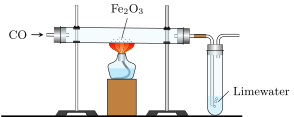
We can observe that the powder in the tube gradually changes from reddish-brown to black. This black powder is the reduced iron. The clear limewater in the test tube turns milky, confirming the formation of carbon dioxide.
Thus, iron oxide can be reduced to iron by carbon monoxide upon heating, simultaneously producing carbon dioxide:
\[ \ce{Fe2O3 + 3CO ->[\Delta] 2Fe + 3CO2}{\uparrow} \]
The smelting of iron ore into iron is a complex process, but its principal reaction involves using oxidation–reduction reactions at high temperature to reduce iron from its ore using a reducing agent (primarily carbon monoxide).
Iron smelting is typically carried out continuously in a blast furnace (Figure 1.4).
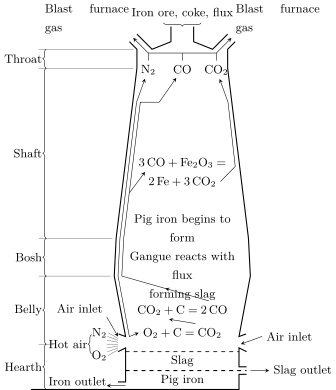
A blast furnace consists of five parts: throat, shaft, bosh, belly, and hearth, with inlets for charge and hot blast, and outlets for iron, slag, and blast-furnace gas.
The main raw materials are iron ore, coke, limestone, and air.
During smelting, the ore, coke, and limestone are proportioned into a burden and fed in batches from the top. Preheated air is blown in through tuyères at the bottom. As hot gases rise and the burden descends, they make thorough contact, allowing reactions to proceed smoothly and the burden to be progressively preheated, making efficient use of thermal energy. Near the tuyères, coke burns in the hot blast to produce carbon dioxide and release large amounts of heat:
\[ \ce{C + O2 -> CO2} + \text{heat} \]
The \(\ce{CO2}\) rises and reacts with hot coke to form carbon monoxide:
\[ \ce{CO2 + C -> 2CO} - \text{heat} \]
The carbon monoxide rises further and contacts the descending ore. In the middle of the shaft, the vast majority of the iron oxides are reduced to iron:
\[ \ce{Fe2O3 + 3CO ->[\text{high temp.}] 2Fe + 3CO2}{\uparrow} \]
During smelting, manganese, silicon, sulfur, phosphorus, and other elements in the ore are also reduced. Small amounts of carbon, manganese, silicon, sulfur, and phosphorus dissolve into the iron at high temperature, forming pig iron. The melting point of pig iron (\(1100\)–\(1200\,{}^{\circ}\text{C}\)) is much lower than that of pure iron (\(1535\,{}^{\circ}\text{C}\)).
Besides iron oxides, the ore contains refractory gangue that must be removed. The added limestone serves as a flux: at high temperature, lime (\(\ce{CaO}\)) from the decomposed limestone reacts with the silica in the gangue to form calcium silicate, which has a lower melting point and separates from the ore:
\[ \ce{CaCO3 ->[\text{high temp.}] CaO + CO2}{\uparrow} \]
\[ \ce{CaO + SiO2 ->[\text{high temp.}] CaSiO3} \]
Calcium silicate is the main component of the slag.
The molten iron tapped from the blast furnace can be used directly for steelmaking, or cast into pig iron ingots or castings. The slag can serve as a raw material for cement, slag bricks, and other products. The mixed gas released from the top — containing \(\ce{CO}\), \(\ce{CO2}\), and \(\ce{N2}\) — is called blast-furnace gas. Because it contains large amounts of dust and harmful gases, it must be purified to prevent environmental pollution. After removing dust, the gas is rich in \(\ce{CO}\) with high calorific value and can be used as fuel.
To improve production efficiency, modern blast furnaces employ a series of new technologies to intensify smelting, increase blast temperature, and lower the coke ratio (kilograms of coke per ton of pig iron), thereby improving the blast furnace utilization coefficient (tons of pig iron per cubic meter of effective volume per day).
Steelmaking
The uses of steel in agriculture, industry, and national defense far exceed those of pig iron. Therefore, most pig iron is further refined into steel.
The essence of refining pig iron into steel is to appropriately reduce the carbon content, remove most of the harmful sulfur and phosphorus, and adjust the alloy element content to within specified ranges. The principal reaction of steelmaking, like iron smelting, involves oxidation–reduction reactions: at high temperature, oxidizing agents are used to oxidize and remove the excess carbon and other impurities from the pig iron. Thus, while both iron smelting and steelmaking use oxidation–reduction reactions, iron smelting primarily uses reducing agents to extract iron from ore, whereas steelmaking primarily uses oxidizing agents to remove excess carbon and other impurities.
Common oxidizing agents used in steelmaking are air, oxygen, and iron oxide. When the oxidizer is added, because iron is the most abundant substance, iron is oxidized first to iron(II) oxide, with release of large amounts of heat:
\[ \ce{2Fe + O2 -> 2FeO} + \text{heat} \]
The iron(II) oxide then oxidizes the silicon, manganese, and carbon in the molten iron in sequence:
\[ \ce{Si + 2FeO -> SiO2 + 2Fe} + \text{heat} \]
\[ \ce{Mn + FeO -> MnO + Fe} + \text{heat} \]
\[ \ce{C + FeO -> CO + Fe} - \text{heat} \]
Some silicon, manganese, and carbon are also directly oxidized by oxygen.
The carbon monoxide gas escapes directly from the melt. The \(\ce{SiO2}\) and \(\ce{MnO}\) react with the slag-forming material quickite (quicklite) to become slag.
The harmful elements sulfur and phosphorus must be removed as completely as possible during steelmaking. Quicklime also reacts with sulfur and phosphorus, converting them to calcium sulfide and calcium phosphate slag:
\[ \ce{FeS + CaO ->[\text{high temp.}] FeO + CaS} \]
\[ \ce{2P + 5FeO + 3CaO ->[\text{high temp.}] 5Fe + Ca3(PO4)2} \]
Slag with high phosphorus content can be processed into phosphate fertilizer, called steel slag phosphate fertilizer.
When the carbon, sulfur, and phosphorus contents have been reduced to meet specifications, the slag is removed. At this point, the molten iron has become molten steel. However, it still contains a small amount of \(\ce{FeO}\), which would make the steel hot-short (brittle at high temperatures). An appropriate deoxidizer (reducing agent) must be added to remove this. Common deoxidizers include ferrosilicon, ferromanganese, and aluminum metal:
\[ \ce{2FeO + Si ->[\text{high temp.}] 2Fe + SiO2} \]
Most of the resulting \(\ce{SiO2}\) forms slag, while some silicon and manganese remain in the steel to adjust its composition.
Currently, the main steelmaking methods are the converter, electric furnace, and open-hearth processes. Here we briefly introduce the widely used, relatively advanced basic oxygen steelmaking (BOF) process.

In the BOF process, scrap steel is first loaded into the furnace, then molten pig iron is poured in along with appropriate slag-forming materials (such as quicklime). An oxygen lance is lowered from the top and high-purity oxygen (\(>99\%\)) is blown at high pressure directly onto the surface of the hot metal, causing direct oxidation reactions to remove impurities. Using pure oxygen instead of air avoids the problem of nitrogen making the steel brittle and removes the heat loss from nitrogen leaving the furnace. After most sulfur and phosphorus have been removed and the composition and temperature meet requirements, blowing is stopped and the lance is raised. For tapping, the furnace is tilted and the molten steel pours into a ladle, where deoxidizers are added for final deoxidation and composition adjustment. Once qualified, the steel can be cast into steel components or ingots, which can then be rolled into various steel products.
During the BOF process, large amounts of brown fumes are generated, consisting mainly of iron oxide dust and high-concentration carbon monoxide gas. These must be cleaned and recovered for comprehensive utilization to prevent environmental pollution. The recovered iron oxide dust can be recycled for steelmaking; carbon monoxide can be used as a chemical feedstock or fuel; the heat carried by the fumes can be used to generate steam. In addition, steelmaking slag can be used to make steel-slag cement, and phosphorus-rich slag can be processed into phosphate fertilizer.
The BOF process offers fast smelting speed, a wide range of steel grades, good quality, fast construction, and low investment. However, since the process atmosphere is entirely oxidizing, desulfurization efficiency is poor and expensive alloying elements are easily oxidized and lost, which limits the grades and quality of steel that can be produced.
What are the similarities and differences between the main reaction principles of iron smelting and steelmaking?
- Pig iron (\(2\%\)–\(4.3\%\) C): hard, brittle, castable but not forgeable; types include white iron, gray iron, and ductile cast iron
- Steel (\(0.03\%\)–\(2\%\) C): hard, tough, elastic; classified as carbon steel or alloy steel
- Iron smelting: reduction of iron ore with CO in a blast furnace; limestone flux removes silica gangue as slag
- Steelmaking: oxidation to remove excess C, S, P from pig iron; basic oxygen furnace (BOF) is the most widely used method
- Both processes use redox reactions, but in opposite directions — smelting reduces, steelmaking oxidizes
Exercises for Section 4
How do pig iron and steel differ in carbon content?
Write the chemical equations for the main reactions in blast-furnace iron smelting. Identify which are redox reactions and which are not. For the redox reactions, identify the oxidizing agent and reducing agent.
In magnetite ore containing \(30\%\) impurities and hematite ore containing \(20\%\) impurities, which has the higher iron content by percentage?
A large blast furnace produces \(400 \times 10^4\ \text{t}\) of pig iron per year (assume \(96\%\) iron content; neglect iron losses during smelting). How many ten-thousand tons of hematite ore containing \(50\%\) iron are needed?
How many tons of pig iron containing \(96\%\) iron can be produced from \(100\ \text{t}\) of iron ore containing \(85\%\) \(\ce{Fe2O3}\)?
Both at the beginning and at the end of steelmaking, the following reactions occur:
\[ \ce{2FeO + Si ->[\text{high temp.}] 2Fe + SiO2} \]
\[ \ce{FeO + Mn ->[\text{high temp.}] Fe + MnO} \]
Explain how their roles differ at the beginning versus the end of the steelmaking process.
1.5 Section 5: Copper
Properties and Uses of Copper
1. Properties of Copper
Copper belongs to Group IB of the periodic table. Its outer electron configuration is \(3d^{10} 4s^1\), with the \(d\) orbitals completely filled. Copper and potassium are in the same period and have the same number of electron shells and outermost-shell electrons. However, their penultimate shells differ: copper has 18 electrons, while potassium has 8. Copper’s higher nuclear charge and smaller atomic radius mean greater nuclear attraction and higher ionization energy, making it far less easy to lose electrons and far less reactive than potassium. Because the \(3d\) and \(4s\) orbitals are close in energy, \(d\) electrons can also participate in bonding, so copper commonly exists in the \(+1\) and \(+2\) oxidation states, with \(+2\) predominating.
Copper is a metal with a distinctive reddish (coppery) luster. Its melting point is \(1083\,{}^{\circ}\text{C}\), and its density is \(8.92\ \text{g/cm}^3\). It is soft and has excellent electrical and thermal conductivity, as well as very good ductility. Copper also has good corrosion resistance — in dry air it is quite stable and does not react with dilute hydrochloric acid or dilute sulfuric acid. However, in moist air, its surface can develop a layer of green basic copper carbonate (\(\ce{Cu2(OH)2CO3}\)), commonly known as patina or verdigris:
\[ \ce{2Cu + O2 + H2O + CO2 -> Cu2(OH)2CO3} \]
At high temperatures, copper is oxidized. Heating copper in air to \(300\,{}^{\circ}\text{C}\) produces a layer of black copper(II) oxide:
\[ \ce{2Cu + O2 ->[\Delta] 2CuO} \]
At high temperatures, copper readily combines with sulfur, halogens, and other elements, but not with nitrogen.
Copper reacts with oxidizing acids such as concentrated nitric acid, dilute nitric acid, and hot concentrated sulfuric acid, producing \(+2\) copper salts and the corresponding nitrogen or sulfur oxides. The laboratory often uses these reactions to prepare such oxides.
2. Uses of Copper
Humans have used copper and its alloys throughout a long history. Chinese workers were already making bronze vessels during the Shang Dynasty, more than 3,000 years ago. Archaeological excavations have revealed that the Shang Dynasty used bronze for agricultural tools, weapons, and ritual vessels. The enormous Si Mu Wu rectangular cauldron, weighing \(875\ \text{kg}\), demonstrates that Chinese artisans had mastered advanced smelting and casting techniques at a very early date.
In the modern era, copper remains a very important metal — its production ranks third worldwide, after iron and aluminum.
Because of its excellent electrical conductivity, copper is widely used in the electrical industry for making wires, cables, and various electrical equipment. Half of the world’s annual copper production is consumed by the electrical industry. Copper can also be made into various alloys, such as brass (\(\ce{Cu}\)–\(\ce{Zn}\) alloy) and bronze (\(\ce{Cu}\)–\(\ce{Sn}\) alloy). Copper and its alloys are used in the machinery, instrument, and defense industries, and in the chemical industry for heat exchangers and cryogenic equipment.
Copper Compounds
Common copper oxides include cuprous oxide (\(\ce{Cu2O}\)) and cupric oxide (\(\ce{CuO}\)). Cuprous oxide is red; cupric oxide is black. When cupric oxide is heated to \(800\,{}^{\circ}\text{C}\), it decomposes into cuprous oxide and oxygen:
\[ \ce{4CuO ->[\text{high temp.}] 2Cu2O + O2}{\uparrow} \]
Cupric oxide can be used as a raw material for preparing copper salts. Cuprous oxide can be used as a red pigment in glass and enamel.
When a \(+2\) copper salt solution reacts with an appropriate amount of base solution, a blue precipitate of copper(II) hydroxide forms. Dissolving this precipitate in ammonia solution produces the coordination compound cuprammonium hydroxide:
\[ \ce{Cu(OH)2 + 4NH3 * H2O -> [Cu(NH3)4](OH)2 + 4H2O} \]
Cuprammonium hydroxide dissolves cellulose. When acid is added, the cellulose precipitates again. This property is exploited to manufacture a type of rayon (cuprammonium rayon).
Copper(II) sulfate pentahydrate (\(\ce{CuSO4 * 5H2O}\)), commonly called chalcanthite (or blue vitriol), is used to prepare electrolyte solutions for electrolytic refining and electroplating of copper. Mixed with lime milk, it forms Bordeaux mixture, an agricultural fungicide.
Occurrence of Copper in Nature
Copper makes up about one ten-thousandth of the Earth’s crust by mass. Native copper is rare in nature; copper exists mostly in the combined state. Important copper minerals include chalcopyrite (\(\ce{CuFeS2}\)), chalcocite (\(\ce{Cu2S}\)), malachite (\(\ce{Cu2(OH)2CO3}\)), and cuprite (\(\ce{Cu2O}\)).
Electrolytic Refining of Copper
The electrical industry demands very high-purity copper, but copper produced from ore through a series of processing steps still contains \(0.5\%\)–\(1.5\%\) of various impurities (zinc, iron, nickel, silver, gold, etc.). This impure copper has poor electrical conductivity and does not meet the requirements of the electrical industry, so it must be further refined by electrolysis.
During electrolysis, the impure copper serves as the anode, thin sheets of pure copper serve as the cathode, and copper sulfate solution is the electrolyte. When a direct current of appropriate voltage is applied, the following reactions occur at the two electrodes:
At the anode: \(\ce{Cu - 2e^{-} -> Cu^{2+}}\)
At the cathode: \(\ce{Cu^{2+} + 2e^{-} -> Cu}\)
As impure copper dissolves continuously at the anode, impurities more active than copper (zinc, iron, nickel, etc.) also lose electrons:
\[ \ce{Zn - 2e^{-} -> Zn^{2+}} \qquad \ce{Ni - 2e^{-} -> Ni^{2+}} \]
However, because their cations are harder to reduce than \(\ce{Cu^{2+}}\), they do not gain electrons at the cathode — they simply accumulate in the electrolyte. Impurities less active than copper (silver, gold) have a weaker tendency to lose electrons, so they do not dissolve at the anode. Instead, they settle as metallic solids at the bottom of the electrolytic cell, forming what is called anode mud. In this way, pure copper deposits at the cathode — typically called electrolytic copper (purity up to \(99.99\%\)). The anode mud can be processed to recover precious metals such as gold and silver.
Separating Copper and Iron Ions by Paper Chromatography
Set up the apparatus as shown in Figure 1.6. Take a strip of filter paper and mark an \(\times\) with a pencil about \(2\ \text{cm}\) from one end. Using a capillary tube, deposit a small drop of a saturated mixture of \(\ce{FeCl3}\) and \(\ce{CuSO4}\) solution as the sample. Allow it to dry and repeat the application three times, keeping the spot diameter within \(0.5\ \text{cm}\) if possible. After spotting, fix the filter paper strip to a rubber stopper.
A large test tube contains a solvent mixture of acetone and \(6\ \text{N}\) hydrochloric acid (9:1 by volume). Insert the filter paper strip so that its lower end dips into the solvent, but the sample spot must not touch the solvent. Stopper the tube and let it stand. When the solvent front has migrated to the upper end of the strip, remove the paper and hold it over the mouth of a concentrated ammonia bottle, exposing it to ammonia vapor. Observe the results.
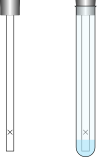
After exposure to ammonia, the upper part of the strip turns reddish-brown and a blue zone appears below it. The reddish-brown color is \(\ce{Fe(OH)3}\) formed by the reaction of \(\ce{Fe^{3+}}\) with ammonia and moisture; the blue color is the \(\ce{[Cu(NH3)4]^{2+}}\) complex ion formed from \(\ce{Cu^{2+}}\) and ammonia. This shows that the \(\ce{Cu^{2+}}\) and \(\ce{Fe^{3+}}\) in the mixture have been partially separated.
Why can \(\ce{Cu^{2+}}\) and \(\ce{Fe^{3+}}\) be separated? Because they migrate at different rates on the filter paper. \(\ce{Fe^{3+}}\) migrates faster, while \(\ce{Cu^{2+}}\) migrates more slowly. After sufficient time, their enrichment zones separate, achieving the separation.
In this experiment, ammonia vapor is used as a developing reagent to reveal the zones.
The technique of using filter paper and a solvent to separate mixtures in this way is called paper chromatography. It can separate trace amounts of similar, difficult-to-separate substances into individual components for identification. Because the equipment is simple and the procedure is relatively easy, paper chromatography is widely used for the separation and identification of traditional Chinese medicines, dyes, pigments, proteins, and other substances.
- Copper: Group IB, outer configuration \(3d^{10} 4s^1\); common oxidation states \(+1\) and \(+2\), with \(+2\) predominating
- Copper is much less reactive than potassium (same period, same outermost electrons) due to higher nuclear charge and smaller atomic radius
- Copper resists dilute \(\ce{HCl}\) and dilute \(\ce{H2SO4}\) but reacts with oxidizing acids (\(\ce{HNO3}\), hot conc. \(\ce{H2SO4}\))
- Patina (verdigris): \(\ce{Cu2(OH)2CO3}\) forms in moist air
- Electrolytic refining: impure Cu anode / pure Cu cathode / \(\ce{CuSO4}\) electrolyte → \(99.99\%\) pure copper; precious metals collect as anode mud
- Paper chromatography separates \(\ce{Cu^{2+}}\) and \(\ce{Fe^{3+}}\) based on different migration rates
Exercises for Section 5
Copper and potassium atoms have the same number of electron shells and outermost-shell electrons. Why is copper far less reactive than potassium?
Why is copper widely used in the electrical industry?
Write the chemical equations for each step of the following transformations:
\[ \ce{Cu -> CuO -> CuSO4 -> Cu(OH)2 -> [Cu(NH3)4](OH)2} \]
\[ \quad\quad\quad\quad\quad\quad\quad\quad\quad\quad \downarrow \]
\[ \quad\quad\quad\quad\quad\quad\quad\quad\quad\quad \ce{Cu} \]
Based on the principle of electrolytic refining of copper, answer the following questions:
- Why is pure copper used as the cathode?
- Why is impure copper used as the anode?
- Why must the electrolyte be a copper salt?
- After the anode gradually dissolves, why do silver, gold, and other impurities settle at the bottom as anode mud?
- The impurities zinc, iron, and nickel also lose electrons and enter the solution as cations. Why do they not deposit at the cathode?
Two galvanic cells are set up using dilute sulfuric acid: one with copper and iron electrodes, the other with zinc and silver electrodes. Identify which metal is the positive electrode and which is the negative electrode in each cell, and write the reactions occurring at both electrodes.
1.6 Section 6: Titanium
Properties and Uses of Titanium
1. Properties of Titanium
Titanium is located in Period 4, Group IVB of the periodic table. Its outer electron configuration is \(3d^2 4s^2\). In chemical reactions, titanium can lose its 2 \(4s\) electrons (giving \(+2\)), and can further lose 1 or 2 \(3d\) electrons (giving \(+3\) or \(+4\)). The \(+4\) state is the most stable, because the completely empty \(d\) orbitals in the \(+4\) state represent a more stable electron configuration than the \(+3\) (one \(d\) electron) or \(+2\) (two \(d\) electrons) states.
Titanium resembles steel in appearance, with a silvery-gray luster and a melting point of \(1660\,{}^{\circ}\text{C}\). Titanium has several highly valuable properties: it has low density (\(4.5\ \text{g/cm}^3\)) yet high strength. Aluminum is light (density \(2.7\ \text{g/cm}^3\)) but lacks strength; steel is strong but heavy (density about \(7.9\ \text{g/cm}^3\)). Titanium thus combines the advantages of both aluminum and steel in terms of density and strength. Titanium alloys maintain excellent mechanical properties both at \(540\,{}^{\circ}\text{C}\) and at very low temperatures (below \(-100\,{}^{\circ}\text{C}\)) — a very valuable characteristic.
Titanium has excellent corrosion resistance. Under ordinary conditions, it is quite unreactive. Even when heated in air to \(500\)–\(600\,{}^{\circ}\text{C}\), titanium remains stable, because a passivating oxide film forms on its surface that prevents further chemical reaction.
At room temperature, titanium is not attacked by dilute hydrochloric acid, dilute sulfuric acid, nitric acid, or dilute alkali solutions, but it can be corroded by hydrofluoric acid, hot concentrated hydrochloric acid, concentrated sulfuric acid, and concentrated phosphoric acid.
Titanium has exceptionally strong resistance to moist chlorine gas and seawater.
At high temperatures, however, titanium readily reacts with oxygen, sulfur, halogens, nitrogen, carbon, and other elements. For example, at high temperature, titanium burns in an oxygen stream to produce titanium dioxide:
\[ \ce{Ti + O2 ->[\text{high temp.}] TiO2} \]
At high temperatures, it reacts with chlorine to produce titanium tetrachloride:
\[ \ce{Ti + 2Cl2 ->[\text{high temp.}] TiCl4} \]
2. Uses of Titanium
Because of its low density, high strength, high-temperature resistance, and corrosion resistance, titanium and its alloys find increasingly widespread applications in the aviation, shipbuilding, and chemical industries.
In the aviation industry, titanium and its alloys are primarily used to make jet engine components and airframes. Reducing the weight of aircraft, rockets, and spacecraft saves significant amounts of fuel, increases flight speed, and extends range. Therefore, replacing heavy steel with low-density titanium is highly advantageous. Furthermore, as flight speeds increase, air friction causes rapid heating of the airframe. Under such conditions, aluminum would soften and deform, but a titanium airframe can withstand these temperatures without losing mechanical strength. In shipbuilding, titanium alloy hulls and equipment resist seawater corrosion while reducing vessel weight, which helps increase speed and payload. In the chemical industry, titanium and its alloys can be used for reactors, distillation columns, pumps, and valves, with better corrosion resistance than stainless steel. In metallurgy, titanium can be added to produce various alloy steels, such as stainless steel and heat-resistant steel.
Metallurgy of Titanium
Titanium is abundant in the Earth’s crust — more so than common metals such as zinc, lead, and copper — but it is widely dispersed. The main minerals used for titanium metallurgy include ilmenite (\(\ce{FeTiO3}\)) and rutile (\(\ce{TiO2}\)). China has rich deposits of ilmenite.
Despite its excellent properties, titanium has not yet achieved widespread use because its metallurgy is quite challenging.
Titanium has a very high melting point and can only be smelted at high temperatures. But at high temperatures, titanium is chemically active and readily combines with oxygen, nitrogen, and carbon to form impurities. Titanium contaminated with impurities has poor mechanical properties — it becomes brittle and loses much of its corrosion resistance.
The current method for producing titanium involves first converting the ore through a series of steps into titanium tetrachloride, then reducing it with magnesium or sodium to produce sponge titanium:
\[ \ce{TiCl4 + 2Mg ->[\text{high temp.}] Ti + 2MgCl2} \]
The resulting sponge titanium cannot be used directly. It must be melted and cast into titanium ingots in a vacuum arc furnace, then further processed into usable forms.
- Titanium: Group IVB, outer configuration \(3d^2 4s^2\); most stable oxidation state is \(+4\) (empty \(d\) orbitals)
- Low density (\(4.5\ \text{g/cm}^3\)) + high strength + high-temperature and low-temperature performance
- Excellent corrosion resistance at room temperature (passivating oxide film); resists seawater and moist \(\ce{Cl2}\)
- At high temperatures, reacts with \(\ce{O2}\), \(\ce{Cl2}\), \(\ce{S}\), \(\ce{N2}\), \(\ce{C}\)
- Applications: aviation (jet engines, airframes), shipbuilding, chemical equipment, alloy steels
- Metallurgy: ore → \(\ce{TiCl4}\) → reduction with Mg → sponge Ti → vacuum arc melting → titanium ingot
1.7 Chapter Summary
I. Transition Elements
The characteristic electron configuration of transition element atoms: the outermost shell has 1–2 \(s\) electrons (Pd excepted). Except for the lanthanides and actinides, additional electrons fill the \(d\) orbitals of the next-to-last shell as atomic number increases. For the lanthanides and actinides, additional electrons fill the \(f\) orbitals of the third-to-last shell.
General properties of transition elements:
- All are metals
- Commonly have multiple oxidation states
- Compounds are often colored
- Readily form coordination compounds
II. Coordination Compounds
A complex ion formed from one type of ion combined with molecules, or from one type of ion combined with another type of ion, is called a coordination ion. Compounds containing coordination ions are coordination compounds.
The composition of a coordination compound (using tetraamminecopper(II) sulfate as an example): central ion (\(\ce{Cu^{2+}}\)) + ligands (4 \(\ce{NH3}\)) = coordination ion (inner sphere, \(\ce{[Cu(NH3)4]^{2+}}\)); counter-ion (\(\ce{SO4^{2-}}\)) = outer sphere.
Inner sphere and outer sphere are bonded by ionic bonds. Central ion and ligands are bonded by coordinate bonds. In forming coordinate bonds, the central ion provides empty orbitals and the ligands provide lone pairs.
Coordination compounds have wide applications in industry, agriculture, and science — including extraction of rare metals, electroplating, photography, and ion identification.
III. Iron
Iron is in Period 4, Group VIII — an extremely important transition element. Its outer electron configuration is \(3d^6 4s^2\). Iron commonly has \(+2\) and \(+3\) oxidation states, with \(+3\) being more stable. Its compounds and ions are mostly colored. Iron readily forms coordination compounds.
Under appropriate conditions, iron can react with oxygen and other nonmetals, acids, salts, and water.
\(\ce{Fe^{2+}}\) and \(\ce{Fe^{3+}}\) can be interconverted:
\[ \ce{Fe^{2+}} \xleftrightarrow[\text{reducing agent}]{\text{oxidizing agent}} \ce{Fe^{3+}} + e^{-} \]
Test for \(\ce{Fe^{3+}}\): reaction with \(\ce{SCN^{-}}\) produces the red \(\ce{[Fe(SCN)]^{2+}}\).
IV. Iron Smelting and Steelmaking
Iron alloys — pig iron and steel:
Carbon content Impurities Mechanical properties Processing Pig iron \(2\%\)–\(4.3\%\) Many Hard and brittle Castable, not forgeable Steel \(0.03\%\)–\(2\%\) Few Hard, tough, elastic Castable and forgeable Iron smelting — Reaction principle: primarily using reducing agents to reduce iron from its ores.
Steelmaking — Reaction principle: primarily using oxidizing agents to oxidize and remove excess carbon and other impurities from pig iron.
V. Copper
Copper belongs to Group IB; outer electron configuration \(3d^{10} 4s^1\). Copper commonly has \(+1\) and \(+2\) oxidation states, with \(+2\) predominating.
Copper has good corrosion resistance — stable in dry air. At high temperatures, it readily combines with oxygen, sulfur, and halogens. Copper can be oxidized by oxidizing acids.
Copper is a very important metal with excellent electrical conductivity, thermal conductivity, and ductility. It is widely used in the electrical industry, national defense, and other sectors of the economy.
VI. General Methods for Metal Extraction
Using reducing agents — Common reducing agents include:
Carbon monoxide or carbon:
\[ \ce{Fe2O3 + 3CO ->[\text{high temp.}] 2Fe + 3CO2}{\uparrow} \]
Hydrogen:
\[ \ce{WO3 + 3H2 ->[\text{high temp.}] W + 3H2O} \]
More active metals (Al, Na, Mg, Ca, etc.):
\[ \ce{Cr2O3 + 2Al -> 2Cr + Al2O3} \]
Electrolysis:
\[ \ce{2Al2O3 ->[\text{electrolysis}] 4Al + 3O2}{\uparrow} \]
Review Problems
Among the following transition elements, which element has the highest possible oxidation state?
A. Cu \(\quad\) B. Zn \(\quad\) C. Fe \(\quad\) D. Ni \(\quad\) E. Cr \(\quad\) F. Mn \(\quad\) G. V \(\quad\) H. Ti
When potassium thiocyanate solution is added to iron(III) chloride solution, a red color immediately appears. If potassium thiocyanate solution is added to potassium ferricyanide solution, will a red color also appear? Explain your reasoning.
A compound has the composition \(\ce{CoCl3 * 4NH3}\). When 1 mol of this compound reacts with excess \(\ce{AgNO3}\), 1 mol of \(\ce{AgCl}\) is produced. When sulfuric acid is added to this compound, no \(\ce{(NH4)2SO4}\) forms. Write the chemical formula of this compound and identify its inner and outer spheres.
Starting from copper, oxygen, hydrochloric acid, and sodium hydroxide, how would you prepare copper(II) hydroxide? Express the process using chemical equations.
A \(300\ \text{mg}\) copper–silver alloy is dissolved in nitric acid, diluted with water, then treated with \(24\ \text{mL}\) of \(0.1\ \text{N}\) \(\ce{NaCl}\) solution, which is just enough to precipitate all the silver ions. Write the relevant chemical equations and calculate the percentage composition of copper and silver in the alloy.
Using \(2\ \text{t}\) of waste acid containing \(30\%\) sulfuric acid, reacted with excess iron filings, how many tons of green vitriol (\(\ce{FeSO4 * 7H2O}\)) can be produced?
Into a test tube containing \(\ce{FeCl2}\) solution, pass excess chlorine gas. Into another test tube containing \(\ce{FeCl3}\) solution, pass excess hydrogen sulfide gas. Then add a few drops of potassium thiocyanate solution to each tube. What phenomena are observed? Write the relevant chemical equations and ionic equations.
Starting from hematite ore containing \(80\%\) \(\ce{Fe2O3}\), how many tons of this ore are needed to produce \(50\ \text{t}\) of pig iron containing \(4\%\) impurities?
Why is limestone added during iron smelting? Write the relevant chemical equations. How many kilograms of limestone containing \(92\%\) \(\ce{CaCO3}\) are needed to remove all the \(\ce{SiO2}\) from \(1\ \text{t}\) of iron ore containing \(15\%\) \(\ce{SiO2}\)?
A \(5\ \text{g}\) steel sample is burned in a stream of oxygen, yielding \(0.0925\ \text{g}\) of carbon dioxide. Calculate the percentage of carbon in the steel sample.
Translator’s note: The original text lists 68 transition elements. The number is slightly higher by modern IUPAC conventions, which include elements through oganesson (Og, \(Z = 118\)). The exact count depends on whether the lanthanides and actinides are all classified as transition elements.↩︎
Translator’s note: The Chinese term 络合物 (luòhéwù) is used throughout this textbook for what is now called a coordination compound or complex. Both terms refer to the same class of compounds.↩︎
Translator’s note: The original uses the older Chinese name 铜氨络离子 (copper–ammonia complex ion). In modern IUPAC nomenclature, this is the tetraamminecopper(II) ion.↩︎